

Camino de Seda 2024

Wine Details


- Red - Medium to Full Bodied
 Spain
Spain- Vino Tinto
- Monastrell-based blend
- Vegan
- 14.5% ABV
- 750 ml
- Vegetarian
Flavor Profile
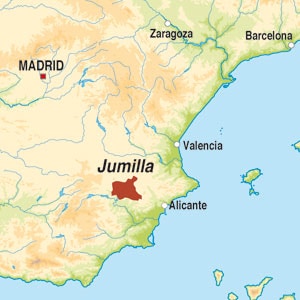
The “road” to silky-smooth richness ends right here with Camino de Seda, a superb deeply fruited Spanish red crafted by rising star winemaker Mireia Altimira. It’s her homage to the famed “silk route” that once ran right through the sun-drenched vineyards of Jumilla.
In fact, her Monastrell and Syrah grapes grow in a special ancient vineyard that’s encircled by mulberry trees—which happen to be the silk worm’s favorite dwelling. Making this place even more special, these ungrafted vines are rare survivors of the 1800s phylloxera plague, in which Europe's grape vines were nearly decimated by the tiny bug that gnawed on vine roots. (Read more below about how these vines are preserved.)
This luscious red has wowed international judges, scooping up multiple gold medalsvintage after vintage after vintage. This edition is sure to do the same. Look forward to intense dark berry aromas and flavors, supported by hints of mocha, vanilla and earthy spice—just the thing for a grilled lamb kebab or a plate of charcuterie and cheeses.
P.S. For the curious botanists, here's a word from the vinegrowers: "To guarantee the survival of our ancient vines, we use the “marcottage” replanting system. When a vine reaches the end of its long lifecycle, we take a branch of an adjacent vine and introduce it to the soil. They we guide the branch so that it emerges where the dead vine used to be. The branch remains connected to the origin vine for some years, until its roots are strong enough to keep growing on its own. This is a vital system, practically extinct due to its high costs and slow process, that they use to ensure the continuity of our original, historic and strong vines."
The “road” to silky-smooth richness ends right here with Camino de Seda, a superb deeply fruited Spanish red crafted by rising star winemaker Mireia Altimira. It’s her homage to the famed “silk route” that once ran right through the sun-drenched vineyards of Jumilla.
In fact, her Monastrell and Syrah grapes grow in a special ancient vineyard that’s encircled by mulberry trees—which happen to be the silk worm’s favorite dwelling. Making this place even more special, these ungrafted vines are rare survivors of the 1800s phylloxera plague, in which Europe's grape vines were nearly decimated by the tiny bug that gnawed on vine roots. (Read more below about how these vines are preserved.)
This luscious red has wowed international judges, scooping up multiple gold medalsvintage after vintage after vintage. This edition is sure to do the same. Look forward to intense dark berry aromas and flavors, supported by hints of mocha, vanilla and earthy spice—just the thing for a grilled lamb kebab or a plate of charcuterie and cheeses.
P.S. For the curious botanists, here's a word from the vinegrowers: "To guarantee the survival of our ancient vines, we use the “marcottage” replanting system. When a vine reaches the end of its long lifecycle, we take a branch of an adjacent vine and introduce it to the soil. They we guide the branch so that it emerges where the dead vine used to be. The branch remains connected to the origin vine for some years, until its roots are strong enough to keep growing on its own. This is a vital system, practically extinct due to its high costs and slow process, that they use to ensure the continuity of our original, historic and strong vines."
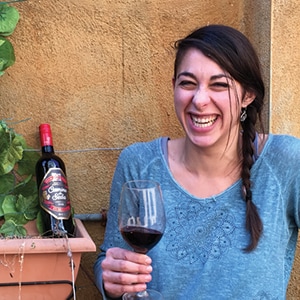
Sarah Everden
Spanish wine expert